
Loading

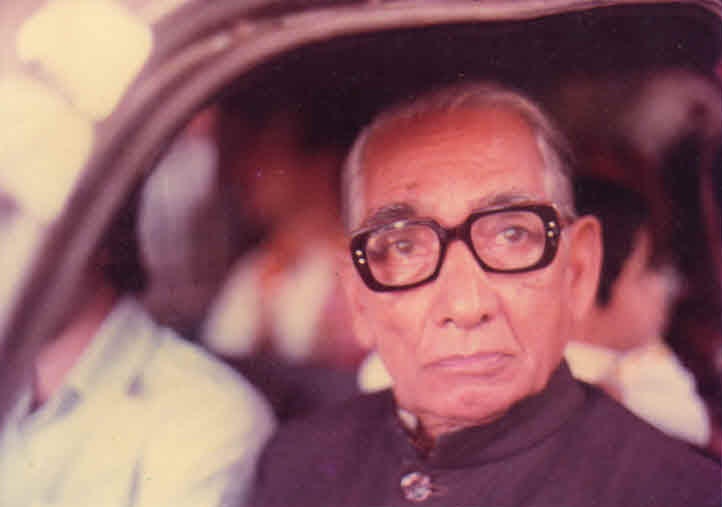
Basanta Kumar Satapathy (26 June 1913 – 20 February 1994) was a distinguished figure in modern Odia literature, noted for his contribution as a short story writer, translator, and academic. A professor of English literature by profession, Satapathy emerged as one of the seminal voices who reshaped Odia prose fiction in the post-independence era through thematic innovation, stylistic finesse, and intellectual depth.
Throughout his literary career, Satapathy published twelve acclaimed collections of short stories, along with several volumes of translations and a personal memoir. His short fiction appeared in leading Odia literary journals such as Jhankara, Samabesha, and Asantakali, and was celebrated for its linguistic sophistication, ironic tone, psychological insight, and restrained humor.
These distinctive features helped establish him as a writer of uncommon talent and originality, whose influence continues to resonate in Odia literary circles. Satapathy's works have enjoyed both critical recognition and wide readership. His stories have been translated into various Indian languages, thereby broadening his reception across linguistic boundaries. A notable recent contribution is the English translation of a selection of his stories by Professor Bikram Keshari Das. Several of Satapathy’s collections have been published by major national literary institutions such as the Sahitya Akademi, National Book Trust, and Bharatiya Jnanpith. His writings have also been incorporated into school and college curricula by the Government of Odisha, attesting to their pedagogical and cultural relevance. In 2013, his birth centenary was commemorated jointly by the Kendra Sahitya Akademi and the Odisha Sahitya Akademi. In recognition of his literary accomplishments, Satapathy received several prestigious awards, including the Odisha Sahitya Akademi Award (1968), the Prajatantra Jhankar Puraskar (1979), the Sarala Award, and the Utkal Sahitya Samaj Sammana. A monograph on his life and work was published by the Sahitya Akademi as a part of its series titled Makers of Indian Literature.
Satapathy was born in the village of Pandhada in Mayurbhanj district to Pandit Bholanath Shastri. He completed his early education in Pandhada and Shirsa and passed his matriculation from Baripada High School. A recipient of a merit scholarship awarded by the Maharaja of Mayurbhanj, he pursued higher studies at Ravenshaw College, Cuttack. During his student years, he was deeply influenced by the nationalist movement and had the opportunity to engage with national leaders such as Mahatma Gandhi, Jawaharlal Nehru, and Vinoba Bhave. His conversations with Bhave concerning the reform of the Odia script highlight his early engagement with linguistic and cultural reform.
After obtaining his postgraduate degree in English literature in 1938, Satapathy joined Baripada High School as a teacher. He was subsequently appointed Public Relations Officer to the Maharaja of Mayurbhanj. In this capacity, he edited several key publications of the princely state including Bhanjapradeepa, Prajasabha, Mayurbhanj Gazette, and Mayurbhanj Chronicle. Under his stewardship, Bhanjapradeepa achieved regular publication and featured works by leading Odia intellectuals and literary figures such as Kalindicharan Panigrahi, Gopal Chandra Praharaj, Shashibhushan Ray, Lakshmikanta Mahapatra, Mayadhar Mansingh, and Ramakrushna Nanda.
In the aftermath of India’s independence, Satapathy played a significant role in the political integration of Mayurbhanj into the Indian Union. As Publicity Officer, he was a member of the delegation that met with national leaders including V.P. Menon and Sardar Vallabhbhai Patel in Delhi to negotiate the terms of accession. Following the merger, he was transferred to the Odisha Secretariat in Cuttack, where he continued to serve as Public Relations Officer under the state administration.
Satapathy later qualified for the Odisha Administrative Service and joined the higher education sector as a lecturer in English. He served in prominent institutions across Odisha, including Samanta Chandrasekhar College (Puri), Krushnachandra Gajapati College (Paralakhemundi), and Fakir Mohan College (Balasore). He retired on 15 January 1970 as Professor of English at Fakir Mohan College, having mentored generations of students and enriched the academic environment through his scholarship and literary engagement.